
Show captioni
Rohit Sharma
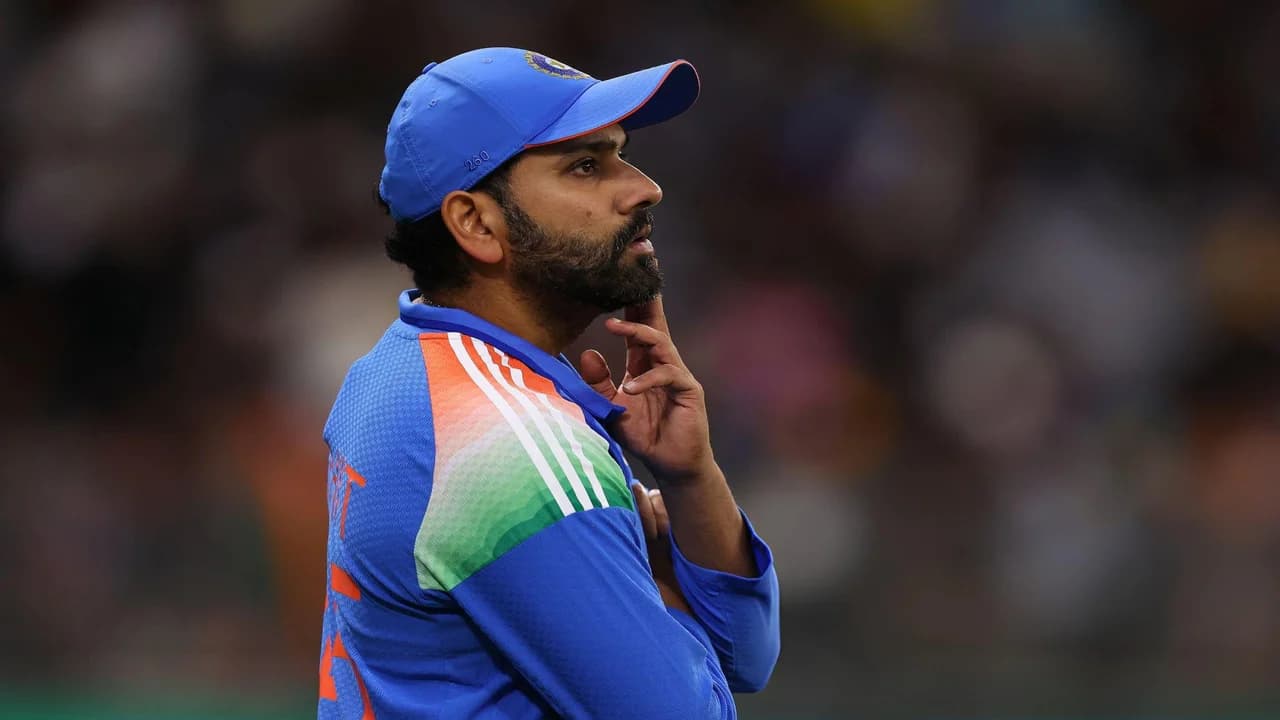
Rohit Sharma Takes Charge Mid-Game and Forces Washington Sundar to Adjust
Dherandra Bisht
Modified 24 October 2025 at 03:50 AM IST -5 min read
In a thrilling second One-Day International (ODI) held at the Adelaide Oval on October 23, 2025, Rohit Sharma’s leadership skills were on full display, even after stepping down from the captaincy. With Shubman Gill taking over as the new ODI captain, Rohit jumped in during Australia’s batting to adjust Washington Sundar’s bowling strategy against the formidable left-hander, Cooper Connolly. This timely intervention not only showcased Rohit’s lasting tactical brilliance but also played a part in a nail-biting match that Australia won by two wickets, giving them a 2-0 lead in the series.
Rohit Sharma Intervenes After 33rd Over to Guide Washington Sundar Against Left Hander Cooper Connolly
Australia’s innings kicked off well, with Travis Head and Mitchell Marsh scoring 52 runs in 8.3 overs before Marsh was dismissed for 28. By the 33rd over, the score was 180/5, and the young left-hander Cooper Connolly, sitting on 45 at that time, was posing a real threat against the spin bowlers. Washington Sundar, who had been brought into the attack earlier, bowled economically but was finding it hard to contain Connolly, who was adeptly using his footwork to counter the spin and locate gaps on the leg side.
It was at this point, right after the 33rd over, that Rohit Sharma’s instincts as a captain came into play. Caught by the stump mic and the broadcast cameras, Rohit—who was fielding at short cover—stopped Sundar as he was heading back to his mark.
— The Game Changer (@TheGame_26) October 23, 2025
The 38-year-old opener was in a spirited, 20-second discussion, using animated hand gestures to explain some changes: he pointed at fine leg to highlight angling the ball away from the left-hander and mimicked a slower arm action. Sundar, the 26-year-old off-spinner, paid close attention without replying, soaking in the advice before going back to his run-up.
Captain Shubman Gill was seen in the background, tweaking the field placements, indicating a deeper long-on and a finer midwicket, fully dedicated to his role. This division of tasks emphasized the team’s cooperative vibe under Gill, with Rohit serving as a senior mentor without overstepping his bounds.
Varun Aaron, a former fast bowler for India, discussed the tactical nuance live on Star Sports commentary from the press box at Adelaide Oval, “The key for the off-spinner to the left-hander is to move the ball away from the batter, and bowl a little slower.”
Aaron, who played 9 ODIs for India between 2013 and 2018, added: “Generally, captains come and tell the bowlers what to do… but here, Rohit’s experience is gold—Sundar was drifting into the pads, allowing easy singles, and Rohit spotted it instantly.”
During the 34th over, Aaron mentioned that Rohit’s feedback likely pushed Sundar to adjust his pace and line, resulting in just 5 runs given away in his next over, compared to the earlier average of 8 runs.
Sundar acted on the changes right away, sending down two slower deliveries that Connolly defended carefully, and an away-angler that beat the outside edge. Connolly managed to score a match-winning 78 not out off 72 balls (featuring 7 fours and 3 sixes), aiding Australia in reaching 265/8 in 48.4 overs, while Sundar’s adjusted spell ended with 1/42 off 10 overs—his most economical effort in the series thus far.
Rohit Sharma Holds India Together with 73 Runs from 97 Balls Against Australia
After winning the toss and opting to bat first, India hit a rough patch early on, losing their captain Gill for 9 runs (caught behind off Mitchell Starc in the fourth over) and their key player, Virat Kohli for a golden duck (bowled by Starc in the fifth over). At 30/2 after 8 overs, the onus was on Rohit and No. 3 Shreyas Iyer to get things back on track.
Rohit stepped up at No. 2 after Gill’s wicket, holding the innings together with a steady 73 from 97 balls, featuring 6 fours and 2 sixes. His performance, spanning 124 minutes, put the critics to rest and added some much-needed stability on a pitch that was offering seam movement in the cloudy weather.
According to the official scorecard from the ICC match center, Rohit had a strike rate of 75.25 during his innings, mixing a careful approach with some smart aggression, he went after Starc’s short deliveries with pulls and directed Pat Cummins’ fuller balls towards the leg side.
The standout moment was Rohit’s impressive 118-run partnership for the third wicket with Iyer, who played a smooth innings of 71 off 77 balls (including 7 fours and 1 six). Iyer later acknowledged Rohit’s contribution during an on-field chat with Star Sports commentator Harsha Bhogle, mentioning, “Rohit’s experience was crucial; he talked me through the conditions and kept things simple—rotate strike and wait for the loose ball.” This stand, built over 18.2 overs, pulled India out of trouble and set a platform for the middle order.
Axar Patel, promoted to No. 5, scored 44 runs off 41 balls (including 4 fours and 2 sixes), partnering with Washington Sundar for a 39-run sixth-wicket partnership (Sundar scored 12 off 14). The innings wrapped up at 264/9 in 50 overs, thanks to a determined 37-run stand for the ninth wicket between Harshit Rana (24 not out off 20) and Arshdeep Singh (13 off 18).
Australia’s bowlers, spearheaded by Starc (3/48), were effective in their approach, yet Rohit’s performance was commended by ex-Australia captain Michael Clarke on Fox Cricket commentary, “That was vintage Rohit—patient, watchful, and punishing the errors. At 38, he’s proving why he’s irreplaceable.”
This episode in Adelaide not only sparked conversations about Rohit’s career length but also highlighted the smooth transition with Gill. As India gears up for the final ODI, Rohit’s mix of runs and wisdom continues to be a key element, showing that real leadership goes beyond just wearing the armband.

Dherandra is a College Football writer at Sports League Season. An athlete-turned-writer, he brings on-field perspective to his coverage, highlighting the energy, rivalries, and culture that define campus football. His reporting emphasizes quick-turn updates and nuanced storytelling, connecting directly with engaged fans. Dherandra believes the vibrant atmosphere at college football games fosters community and is central to the sport’s growth in America.
View all articles by Dherandra BishtShare this article