
Show captioni
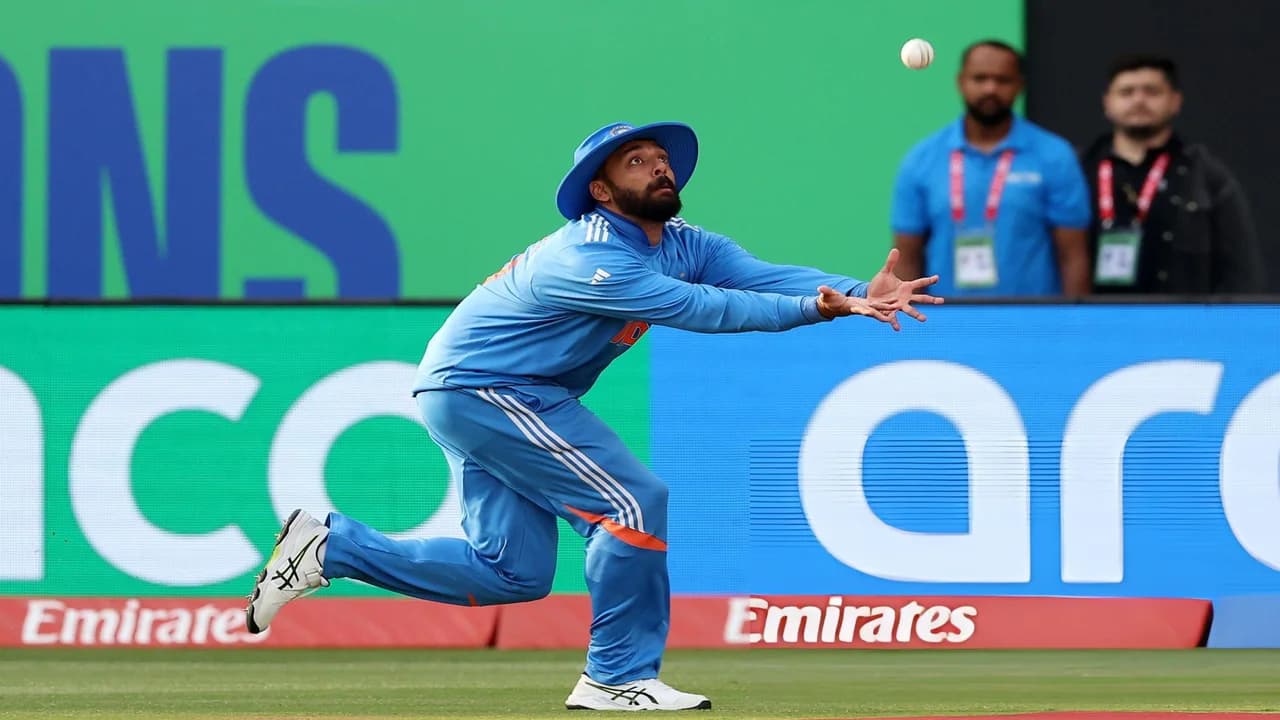
Varun Chakaravarthy
India’s new intimidation line arrives with Abhishek Sharma in the first burst and Varun Chakaravarthy after
Dherandra Bisht
Modified 12 November 2025 at 09:29 PM IST -4 min read
Abhishek Sharma steps into the powerplay like it’s in debt to him for runs. Varun Chakaravarthy joins later and turns the innings into a tricky situation. Ravichandran Ashwin feels that these two are now the pulse of India’s T20 threat. This isn’t mere hype or guesswork; it’s based on solid evidence. If teams fail to handle the first wave and make it through the ensuing squeeze, they won’t be around for long in 2026. The caution has already been sounded.
Abhishek Sharma Surges to Second-Fastest 1,000 T20I Runs in Indian History
At just 25, Abhishek Sharma is the face of India’s modern aggression—a left-handed opener who treats the powerplay like his own batting haven. His journey sped up in 2025, as he became the second-fastest Indian to hit 1,000 T20I runs (after Virat Kohli) in a mere 528 balls, thanks to his stellar displays in the Asia Cup and the recent series with Australia.
In the tour of Australia, Sharma gathered 163 runs in four innings, boasting an average of 40.75 and a strike rate of 167, which led to him being named Player of the Series. A highlight was his fiery 59 off 34 in the second T20I (Visakhapatnam), where he and captain Yadav (57* off 30) chased down 87 runs in just 9.1 overs, achieving a 10-wicket victory. Even in the rain-affected first match, he scored 26 off 15, compelling bowlers like Xavier Bartlett to resort to wide yorkers.
During the fourth T20I, Ashwin concentrated on Australia’s strategies, “Australian bowlers to Abhishek Sharma, in the powerplay itself, he made 29 off 23… Nathan Ellis hasn’t bowled any balls within the stumps. They have gone wide outside the off stump, and they also went a bit pace off to make sure that a swinging arc is curtailed.” This rapid bowling and slower deliveries curtailed Sharma’s signature ramps and scoops, but he still managed to adapt, scoring at more than a run-a-ball before a tactical slowdown.
Post-series, Sharma reflected on his preparation in an interview with Times of India: “I was preparing… trained specifically for these conditions,” Gambhir’s support is credited for his bold style. Ashwin cautions that in 2026, the first step in any chase or defense against India will be dealing with Sharma’s “high-risk powerplay hitting.”.
How Varun Chakaravarthy shifted the tempo in the middle overs for India
When Sharma sets the stage, Varun Chakaravarthy maintains the grip in the middle. The 33-year-old spinner for Kolkata Knight Riders, recognized for his knuckle-ball leg-spinners and sliders, topped the ICC T20I bowling rankings in September 2025 with 799 points. After a three-year break due to an injury in 2021, he made a stunning return to international cricket in October 2024, claiming 43 wickets in 22 T20Is in the current cycle.
Despite not taking any wickets in three World Cup matches in 2024 (giving away 71 runs), Chakaravarthy made a strong comeback in 2025, emerging as India’s leading T20I bowler. In Australia, he took five wickets with an economy rate of 6.5, which included a crucial 2/33 in the second T20I in Hobart and 1/26 in the deciding match at Gold Coast. A memorable moment occurred in the fourth match when his teammate Abhishek Sharma dropped an easy catch off his bowling, leaving Chakaravarthy visibly upset but he recovered well, limiting Australia to 119 while they chased 168.
https://x.com/Cricketracker/status/1986764668132843907
Ashwin lauded Chakaravarthy’s “trajectory, angle, and variations” that demand specific matchups. Heading into the 2026 decider at Carrara, he added: “You will notice… they are limiting hitting areas by bowling slightly wider… but against Varun, teams like Australia’s will prepare because that will give them leverage.” With an eye on a milestone approaching 50 T20I wickets faster than Kuldeep Yadav, Chakaravarthy could really shine on subcontinental surfaces.
Ashwin’s strategy highlights survival methods: Survive Sharma’s early attack, then dismantle Chakaravarthy’s spin tactics on conducive pitches. If you fail at either, India’s depth, Yadav’s fireworks in the middle order, Bumrah’s late-game strikes, and all-rounders like Washington Sundar, will take charge.
Gambhir echoed this evolution post-series, telling reporters: “All-rounders [and young guns] are the biggest positive… we’ve experimented to find what works for 2026.” While opponents scrutinize the Australian footage, India’s updated approach, strike hard, then tighten the grip, heralds another fearsome segment. For those aiming for the trophy, Ashwin’s advice is unmistakable: Conquer these two, or witness India safeguard their championship.

Dherandra is a College Football writer at Sports League Season. An athlete-turned-writer, he brings on-field perspective to his coverage, highlighting the energy, rivalries, and culture that define campus football. His reporting emphasizes quick-turn updates and nuanced storytelling, connecting directly with engaged fans. Dherandra believes the vibrant atmosphere at college football games fosters community and is central to the sport’s growth in America.
View all articles by Dherandra BishtShare this article